



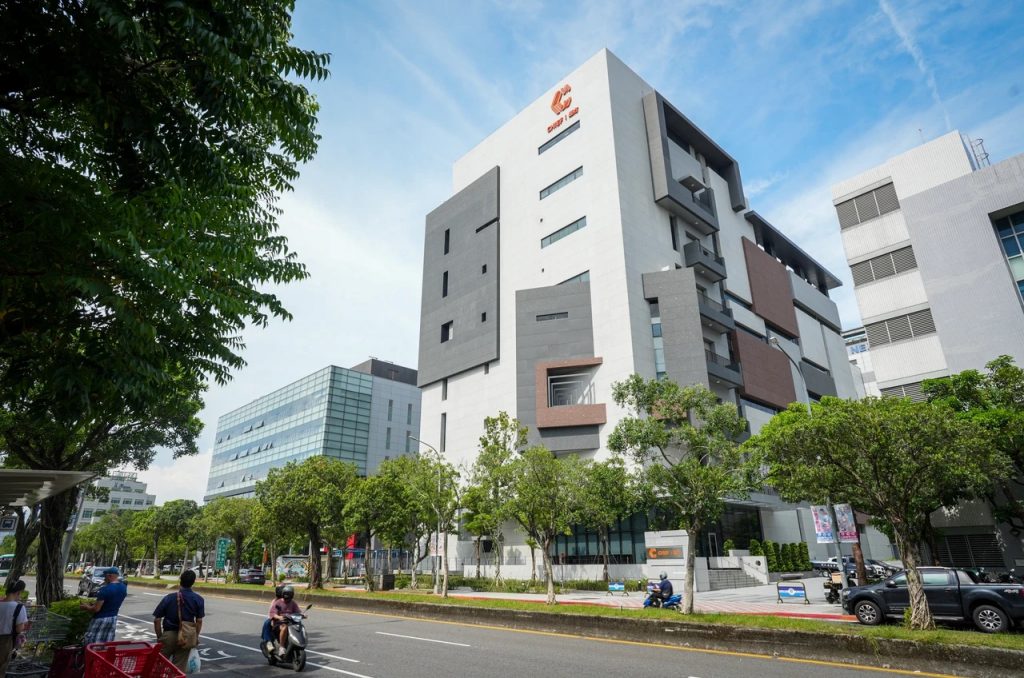
Driving the AI Era: Chief Telecom Leverages its “Natural Monopoly” Advantage by Standing on the Shoulders of Giants
Chief Telecom Strives to Become Asia’s Premier AIDC and Digital Exchange Hub
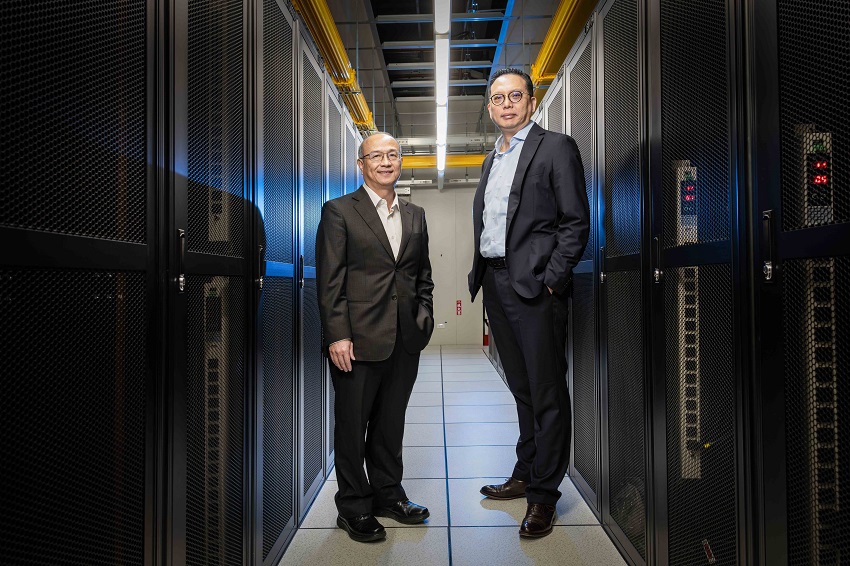
Chief Telecom plans to invest over NT$3 billion to expand and build a new AIDC data center at the Central Taiwan Science Park (CTSP) Huwei Park, targeting major multinational enterprises. Chairman Jerry Shao stated: “Our growth trajectory will resemble a plane taking off, steadily climbing through 2030.” President Johnny Liu added: “Once the CTSP Huwei Park data center opens in 2028, our revenue and profitability will shine even brighter.”
“Standing on the shoulders of giants allows us to see further.” Chief Telecom is investing over NT$3 billion in a brand-new AIDC facility at CTSP Huwei Park, with potential clients including a major international cloud giant. Combined with the fact that over half of the world’s top 10 market cap corporations are already Chief’s long-term clients, Chairman Jerry Shao noted that, excluding one-off expenses, Chief Telecom’s future performance will follow a growth curve akin to “an aircraft ascending at a 15-degree angle” through 2030, with profit growth outpacing revenue growth.
Addressing the rising trend of autonomous AI Agents (such as OpenClaw), President Johnny Liu emphasized that while IDC operators might not directly capture raw compute sales, they stand to reap substantial high-margin revenues from Virtual Machines (VMs) and cloud services. Below are the key highlights from the interview with Chairman Jerry Shao and President Johnny Liu:
Q: What is the defining feature of the new CTSP Huwei Park AIDC Data Center?
A: Our primary considerations are power supply availability and alignment with client demands. The facility incorporates a “Three-Highs” specification design: High Power Capacity, High Load-Bearing Capacity, and High Heat Dissipation, delivering up to 150 kW of power per rack. Chief’s existing Liyuan, Hongding, and LY2 facilities are interconnected via the “Taipei Ring,” which then seamlessly connects to the CTSP Huwei Park facility through the “Taiwan Ring” fiber network linking Taipei, Hsinchu, and Taichung. Although the four data centers span different geographic locations, international submarine cables and our ” Triple Fiber Network Connectivity” architecture link them all together, allowing clients to enjoy the advantages of all four facilities.
Q: Have you secured prospective clients for this fourth AIDC facility?
A: Indeed, we are in discussions with a major international client. Starting this year, market demand for AIDC and IDC facilities has shifted heavily toward massive computing power, driven primarily by AI Inference and Model Training. Industries such as autonomous driving require rapid response times, making high-density computing infrastructure indispensable.
Q: What is the expected occupancy rate when the CTSP Huwei Park facility becomes operational in 2028?
A: In the initial years following commercial launch in 2028, we expect shareholders to start seeing immediate returns. Global cloud service providers (CSPs) and international telecom carriers that are already Chief’s clients will be at the top of our priority list for deployment at CTSP Huwei Park.
Q: What is the outlook for company revenue and profitability?
A: With the momentum generated by LY2 securing strong performance through 2028, the CTSP Huwei Park AIDC facility—one year after its 2028 launch—will perform even better. We hold an exceptionally optimistic outlook for both revenue and profit all the way to 2030. Excluding one-off expenses, growth will follow a steady 15-degree flight path to 2030. Alongside one-off setup revenues, client onboarding will stack recurring revenues, accelerating growth rates.
Chief Telecom has achieved double-digit revenue growth over the past eight years, particularly during the last three years. Based on 2025 revenue of NT$3.944 billion, a 10% annual growth rate would allow us to double our 2025 revenue within seven years, while maintaining double-digit profit growth. When the CTSP Huwei Park facility comes online in 2028, revenue and profit performance for that year will be particularly outstanding, with annual net income growth guaranteed to exceed 10%.
Q: Will depreciation expenses from the new facility impact gross margin?
A: Since 2025, Chief Telecom’s gross margin has surpassed 50%, and we will maintain it above 50% moving forward—even after the new facility comes online. Profit growth has consistently outpaced revenue growth because our strategy focuses on targeting high-margin, highly profitable premium client segments. Furthermore, in 2025, we phased out legacy voice business—which generated over NT$200 million in annual revenue but carried gross margins below 5% and limited future value. By refocusing entirely on high-margin, value-adding sectors like IDC and Cloud services, our profitability will be even more robust.
Q: Why do global giants choose Chief Telecom?
A: Chief Telecom serves as the digital convergence hub of Taiwan, housing submarine cable landing/interconnect centers, the Taiwan Internet Exchange (TPIX)—which is the largest in Taiwan—and the Chief Cloud Exchange (CCX). Many international giants adopt a Server Farm architectural concept in their network design, requiring stringent cybersecurity. Their sole interconnection point in Taiwan is hosted exclusively at Chief Telecom, through which they connect globally. This creates a uniquely resilient and irreplaceable market position for Chief.
At the end of 2025, Chief achieved Google VPP Gold Certification, paving the way for expanded direct interconnection capabilities. As more international players establish regional data centers in Taiwan, Taiwan’s status in global data exchange continues to rise. By standing on the shoulders of these giants, Chief Telecom continuously expands its global footprint.
Q: Do self-built data centers by major electronics manufacturers pose competition?
A: In addition to AI clients, Chief’s ecosystem hosts numerous international and top-tier domestic financial institutions, utilizing a hybrid IDC design. Self-built facilities by tech manufacturers are primarily built for internal testing, given the high operational costs of renting enterprise-grade IDCs. Their market positioning is entirely different from ours.
Q: TPIX has already surpassed Singapore’s exchange and Japan’s JPIX. When will it surpass Hong Kong’s HKIX?
A: Overtaking HKIX before 2027 remains a challenge, as Hong Kong’s university network traffic volume remains extraordinarily large.
Q: Autonomous AI Agents like OpenClaw (“lobster farming”) have become a hot topic. Will such high-compute services drive up demand for AIDCs?
A: When AI Agents execute tasks via OpenClaw, they rely heavily on continuous Machine Learning. Broadly speaking, this introduces cybersecurity and privacy concerns—agents may exceed their given authorization and perform actions without user awareness. Whether using ChatGPT or Gemini, the biggest risks lie in security vulnerabilities, data leaks, unexpected astronomical bills, and subsequent consumer disputes. However, it will unquestionably drive-up demand for raw compute power.
Q: Will Chief Telecom directly benefit from the AI Agent trend?
A: Chief Telecom will not necessarily enter the raw compute business for two reasons: First, raw compute pricing is deflating; second, compute consumption occurs when serving the Claw application—similar to using Gemini, where compute resides on Google’s infrastructure rather than with the IDC operator. However, IDC operators stand to generate substantial, highly profitable revenue from Virtual Machines (VMs) and cloud infrastructure services.
Q: What was the primary consideration behind Chief Telecom’s recent share buyback?
A: Chief Telecom’s operational performance has consistently delivered double-digit growth, with gross margins reaching an all-time high of 52%. However, stock prices experienced abnormal volatility starting in Q3/Q4 of last year. Combined with our active 3-to-5-year expansion plan, we implemented a share buyback program to establish a talent retention mechanism for exceptional employees. Execution of this program is now complete.
