


Exclusive Interview with Chief Telecom Leadership (Part 2) |
Inside the NT$3.5B LY2 Infrastructure: Featuring Seismic Resilience Against Magnitude 7 Earthquakes and Military-Grade Security Protocols.
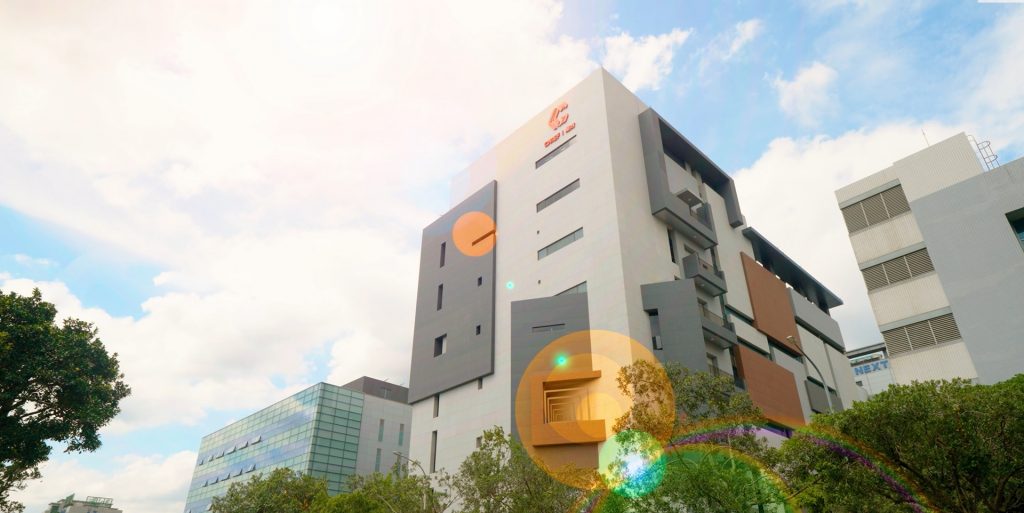
Standing prominently on Jiuzong Road in Neihu, Chief Telecom’s latest facility—the LY2 Intelligent Data Center—presents a sleek, understated exterior that belies its extraordinary engineering. Anchored by eight specialized seismic dampers, the entire superstructure is engineered with an advanced base-isolation design, rendering the building as if it were safely floating above the ground. In addition to withstanding Magnitude 7 earthquakes, the entrance to the underground parking structure is fortified with military-grade anti-ram hydraulic bollards. Every detail is meticulously implemented to forge an impenetrable sanctuary for safeguarding critical AI compute power.
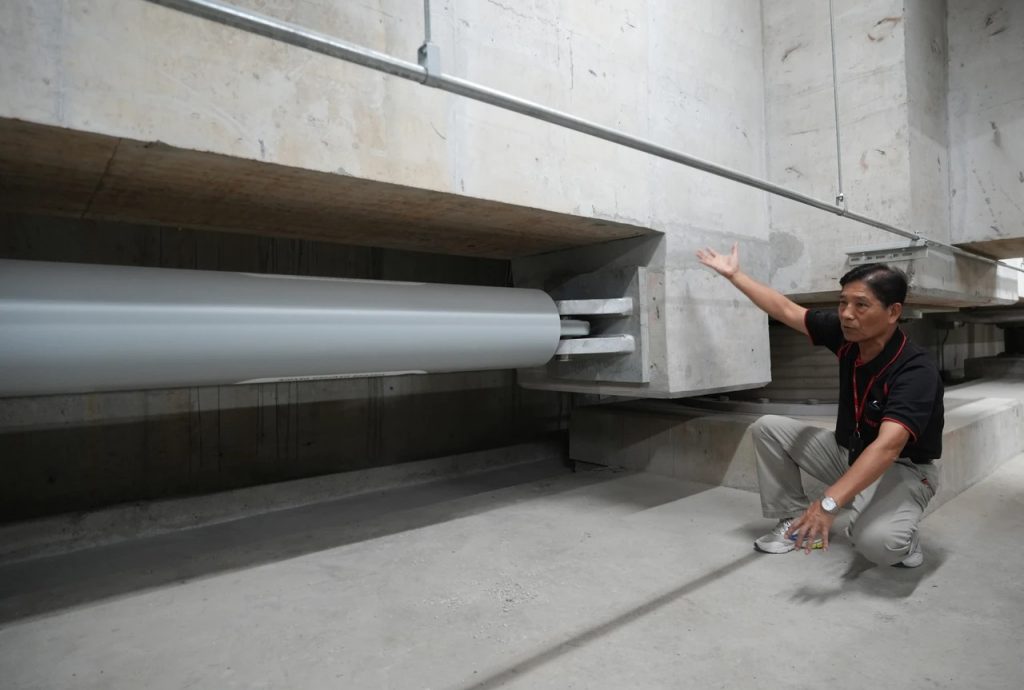
Seismic dampers of the Chief LY2 Intelligent Data Center.
Absorbing Seismic Shockwaves via Advanced Damper Systems
Knews reporters recently gained exclusive access to Chief Telecom’s newly launched NT$3.5 billion Intelligent Data Center (LY2). The facility showcases comprehensive, end-to-end solutions spanning architectural design, power distribution, and water supply. Programmed with two underground levels and seven stories above ground, the building features an extraordinary floor-to-ceiling clearance of 6 meters per level, coupled with an exceptional structural floor-loading capacity of 2,000 kg/m². Meticulous engineering begins at the perimeter: the entrance to the underground parking structure is fortified with military-grade anti-ram hydraulic bollards, designed to effectively deter and neutralize unauthorized vehicular intrusions.
The seismic engineering philosophy of Chief’s Intelligent Data Center transcends conventional vibration reduction or damping—it embraces true base isolation. Navigating through the building’s B1 level, a highly congested MEP (Mechanical, Electrical, and Plumbing) infrastructure space where overhead clearance is tightly constrained, Chief’s data center engineers pointed out the 4-meter-long hydraulic cylinders. These are the core elements of the seismic dampers, engineered specifically to absorb horizontal (lateral) seismic forces. Situated adjacent to each cylinder is a heavy-duty steel helical coil designed to counteract vertical seismic movements. Configured in pairs, a total of eight damper-and-coil assemblies are strategically deployed across Chief’s basement to effectively dissipate destructive seismic shockwaves.
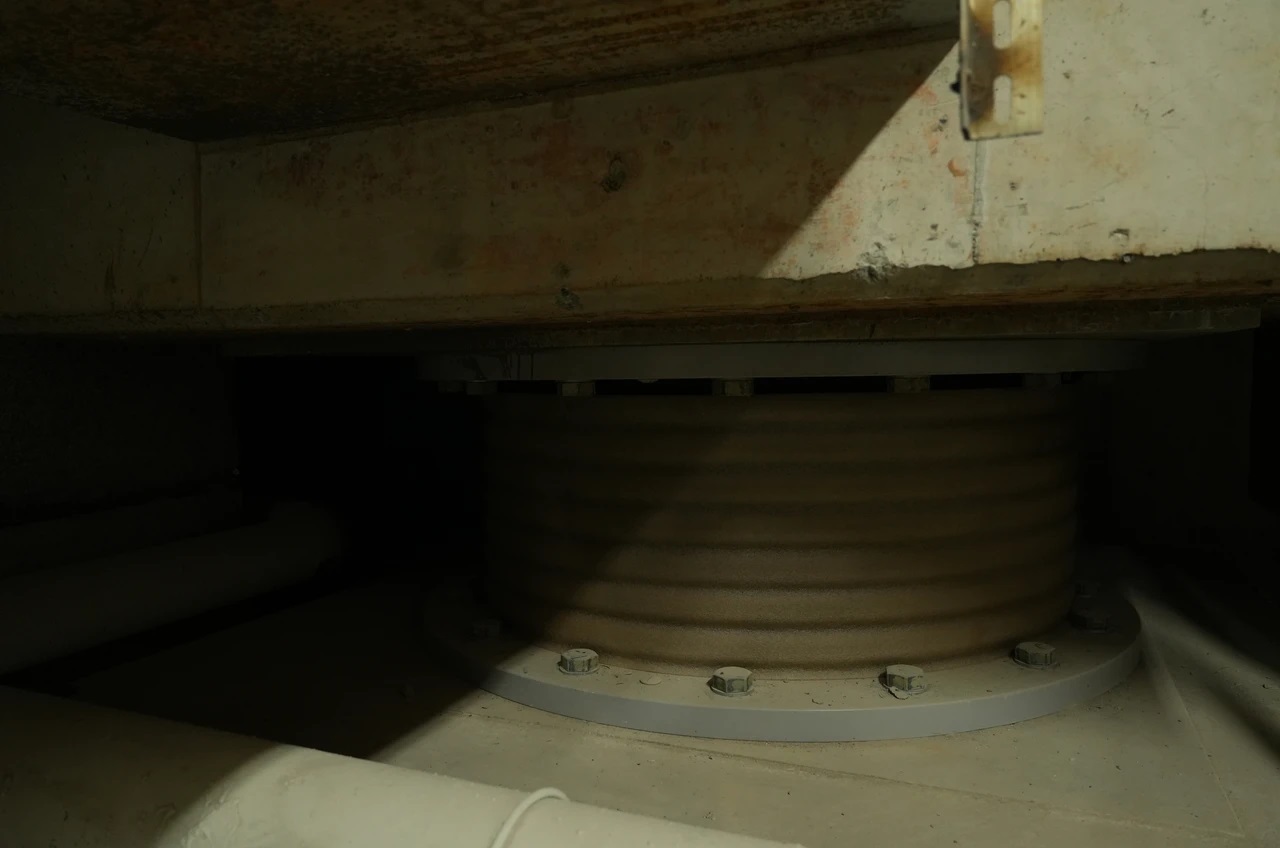
Chief Telecom’s Combined Seismic Damper Assembly.
Chief LY2 Heavy-Duty Freight Elevator Boasts 3,500 kg Load Capacity
According to Chief’s data center engineering team, these advanced dampers bridge the building’s superstructure with the bedrock. When a seismic event occurs, the system absorbs the kinetic energy, allowing for a maximum displacement threshold of up to 70 centimeters. Chief Telecom President Johnny Liu explained, “While Taipei 101 utilizes a massive tuned mass damper ball to mitigate wind and seismic sway, our design deploys multiple specialized, compact dampers at the base. When an earthquake strikes, it creates a “lower-moves, upper-remains-static” effect— meaning the ground may shake, but the main building structure stays completely stable. This level of protection is paramount today. In the past, the hardware within a single rack might have cost NT$2 million.
Today, a single AI rack can easily exceed NT$100 million. A single data hall can comfortably host over NT$4 billion to NT$10 billion worth of client equipment—assets that are far more valuable than the physical building itself. Safeguarding them is our absolute priority. Although contemporary AI servers possess a baseline resilience to standard tremors, data center operators recognize that providing an uncompromisingly stable, ultra-secure colocation environment is critical. Mitigating seismic impact stands as one of our core operational missions. Ingenious design elements extend throughout the facility’s operational floors. First, the data center entrance features an industrial-grade loading dock, allowing logistics machinery to seamlessly transfer heavy AI servers into the facility.
Chief Telecom pointed out that modern AI servers have far outgrown the limits of manual handling; they require specialized machinery for transport. The inclusion of a dedicated loading dock ensures that server deployment into the data halls is completely effortless. To ensure that both the transport machinery and the high-density servers can access the facility simultaneously, the elevators within the Chief LY2 Intelligent Data Center are engineered to industrial extremes. Compared to standard commercial elevators that typically feature a load capacity of around 1,000 kg, Chief’s infrastructure is a powerhouse: each dual-purpose service-and-freight elevator supports a 2,500 kg capacity, while the heavy-duty freight elevator boasts an extraordinary load rating of up to 3,500 kg.
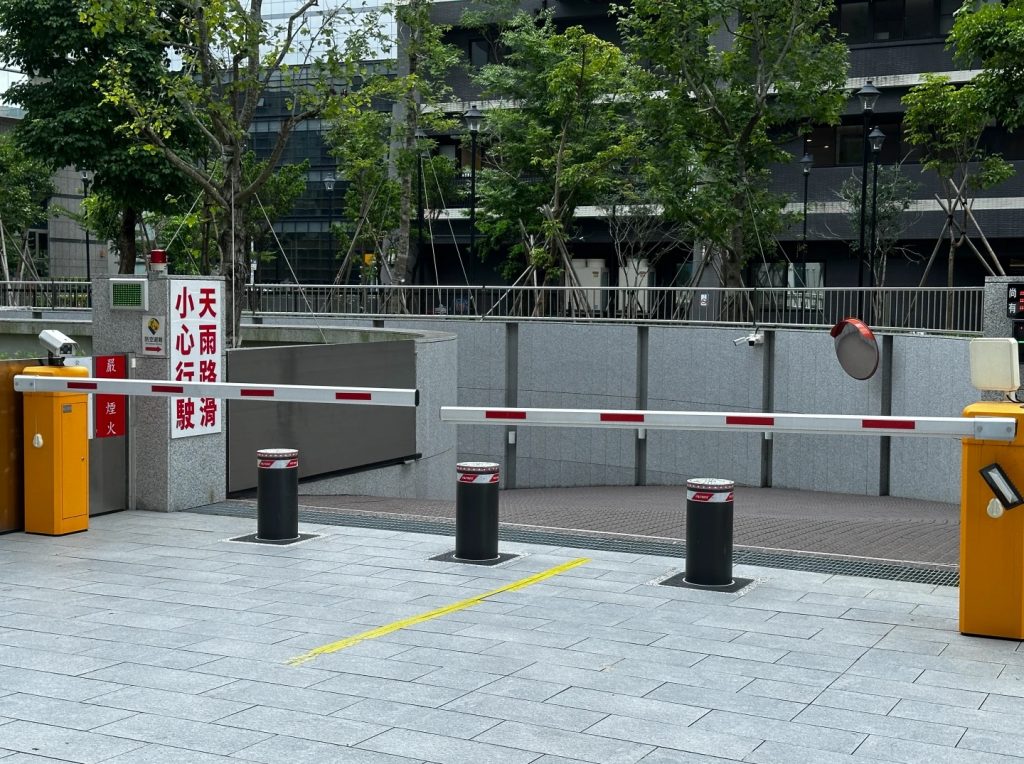
Chief LY2 Intelligent Data Center is a state-of-the-art facility featuring two underground levels and seven stories above ground. The entrance to Chief’s underground parking structure is fortified with military-grade anti-ram hydraulic bollards.
Meeting the High-Density Thermal Meeting the High-Density Thermal Demands of AI: Next-Generation Liquid Cooling Systems Ready for Deployment
Within the data halls, the facility implements an advanced “overhead power, underfloor water” architectural design, routing all power distribution overhead while isolating water piping beneath the raised floor. To support the liquid-cooling requirements of high-density AI servers running simultaneously, Chief Telecom has engineered a dual-loop hot and cold-water piping infrastructure. Under standard operating conditions, the loops run in an N+1 redundancy configuration (one active, one standby). However, during peak workloads with extreme thermal design power (TDP), both loops can operate in parallel to significantly maximize heat dissipation efficiency.
It is well-established that AI servers demand substantial power capacity. To support these massive loads, Chief Telecom has provisioned 12 industrial-grade backup generators. The corresponding diesel storage tanks, located on the ground floor, boast a maximum capacity of 128,000 liters— sufficient to fuel continuous generator operations for up to two full days. In terms of utility power, the facility delivers a total power capacity of up to 20 MW via dual-route feeds (10 MW distributed respectively across the North and South wings). This dual-loop circuit architecture not only strengthens our backup and redundancy mechanisms but also ensures seamless, concurrent maintainability during routine maintenance.
To further fortify the power backup infrastructure, the rooftop of the LY2 Intelligent Data Center hosts 12 emergency backup generation systems. Each generator is outfitted with custom acoustic enclosures and specialized fire suppression equipment, strictly maintaining ambient noise levels between 65 dB to 80 dB. Furthermore, the rooftop is densely equipped with dozens of advanced lightning protection systems to safeguard the entire facility from any electrical interference caused by lightning strikes.
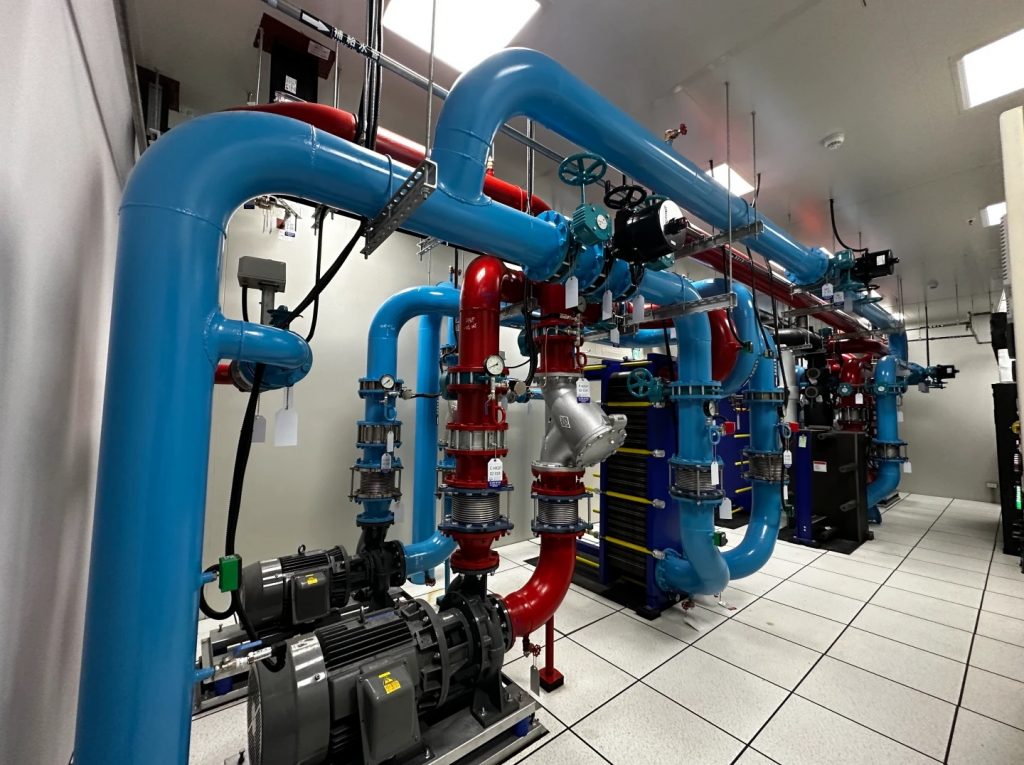
Dual Liquid Cooling Systems: Engineered for Redundancy and Parallel Operation.
Furthermore, Chief Telecom leaves no stone unturned when it comes to the facility’s energy-efficiency design. Chairman Jerry Shao noted, “We are driving our sustainability initiatives through several key strategic pillars. First, we have successfully met the Energy Administration’s mandate to achieve a 1% annual reduction in energy consumption. Second, while an AI data center naturally demands substantial power capacity, the LY2 Intelligent Data Center is engineered from the ground up as a green building. From advanced thermal insulation to overall eco-efficiency, the facility strictly adheres to green building codes, making it a certified green AIDC. Third, we have actively initiated the process for ISO 50001 Energy Management certification. Through these rigorous standards, we aim to further fulfill our commitment to corporate sustainability and ESG mandates.”
*Source: Knews:《knews》
